Loom AI add-on · 2023
Worth paying for
Loom AI’s beta produced the largest engagement gain the product had ever seen but no revenue at all, because there was no way to charge for it. I designed the trial, packaging, and purchase moments that turned it into a business.
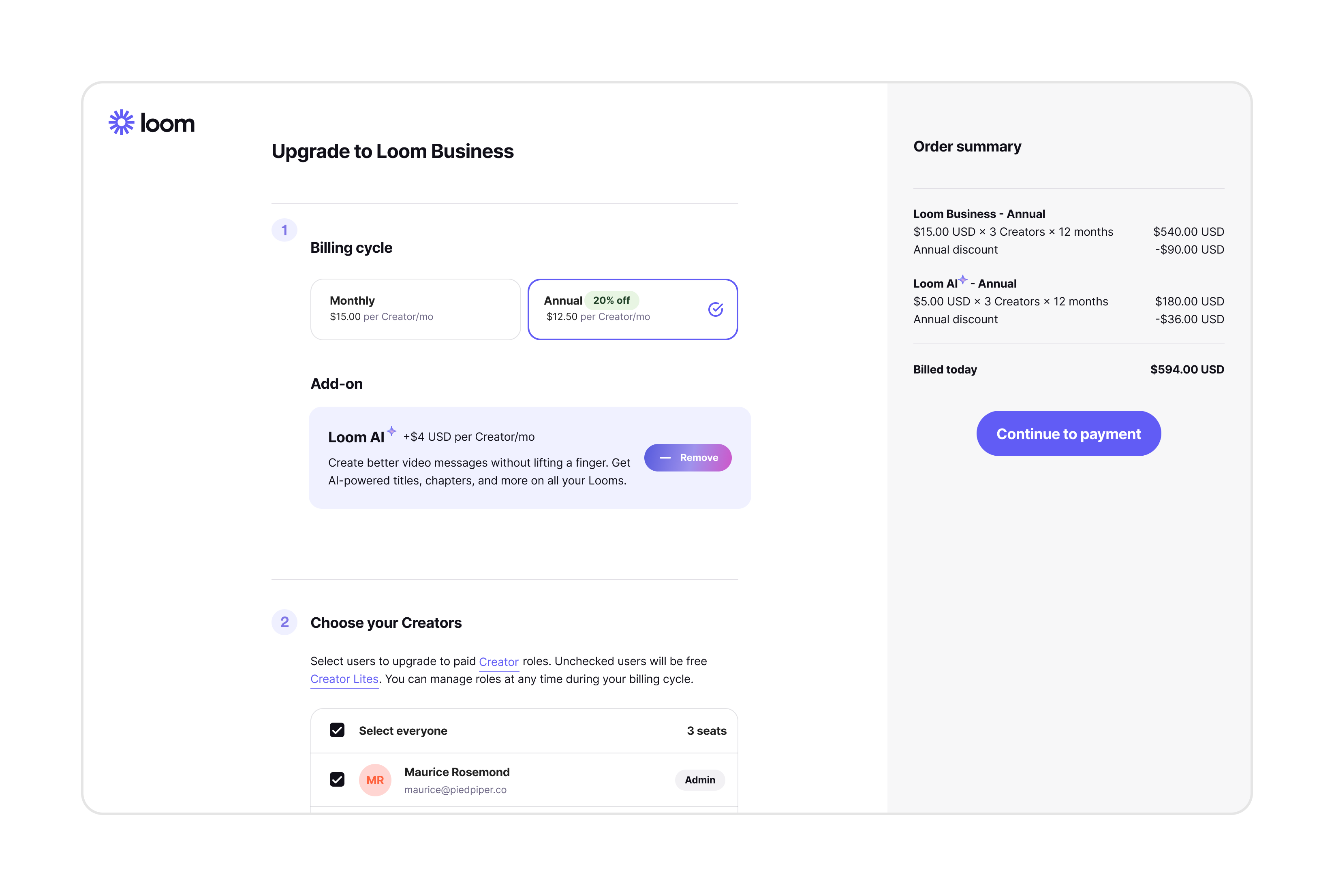
What happened
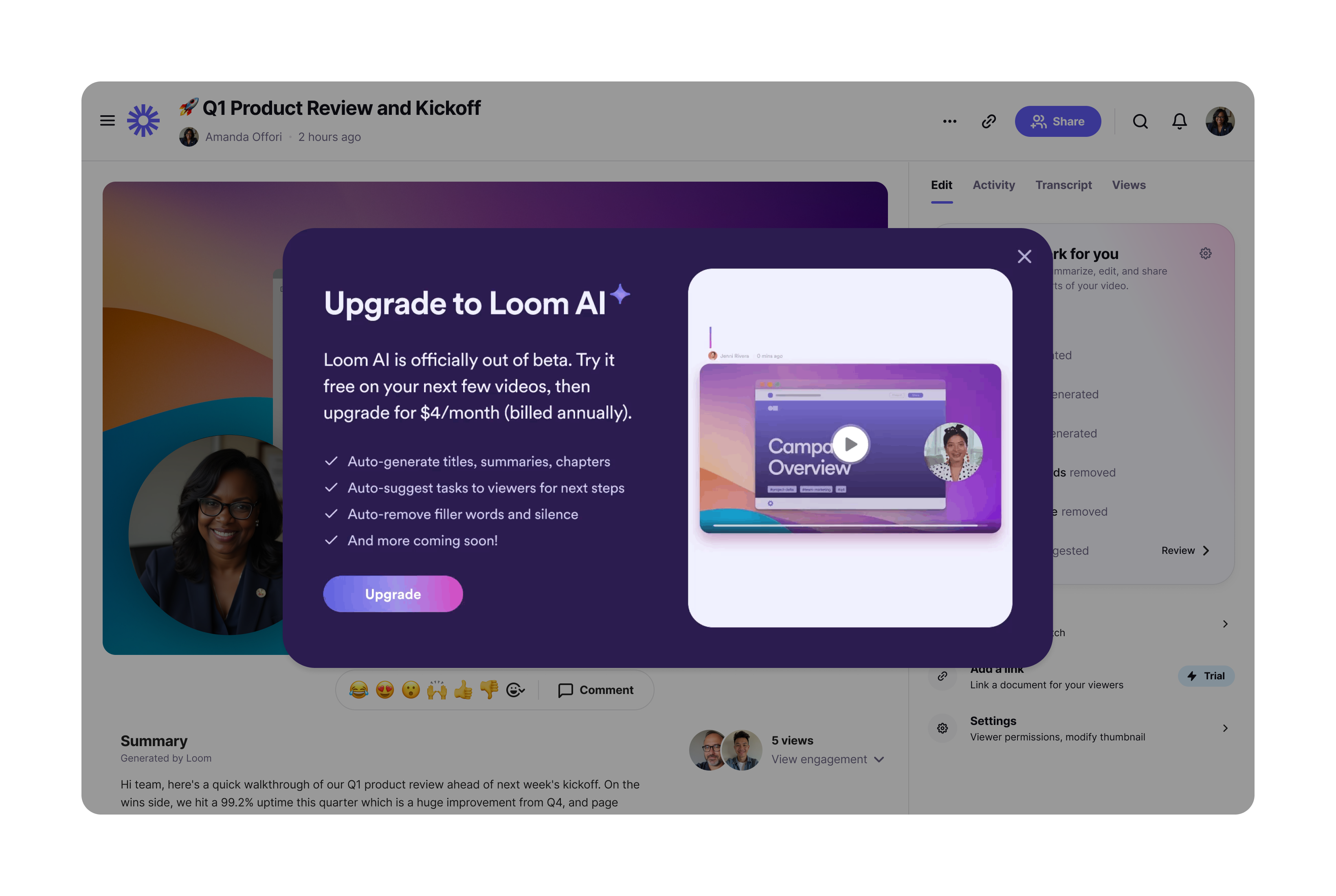
- 40%
- of launch revenue came through the launch modal
- +7%
- video-first views in beta, the largest engagement gain of the period
How it got there
A successful beta that made no money
Loom AI was approaching general availability. The beta had been hugely successful, driving the largest engagement gains the product had seen, but none of it was translating into revenue yet. My team was brought in to solve that, with a mission to design and launch an add-on package.
Testing hypotheses to build the package
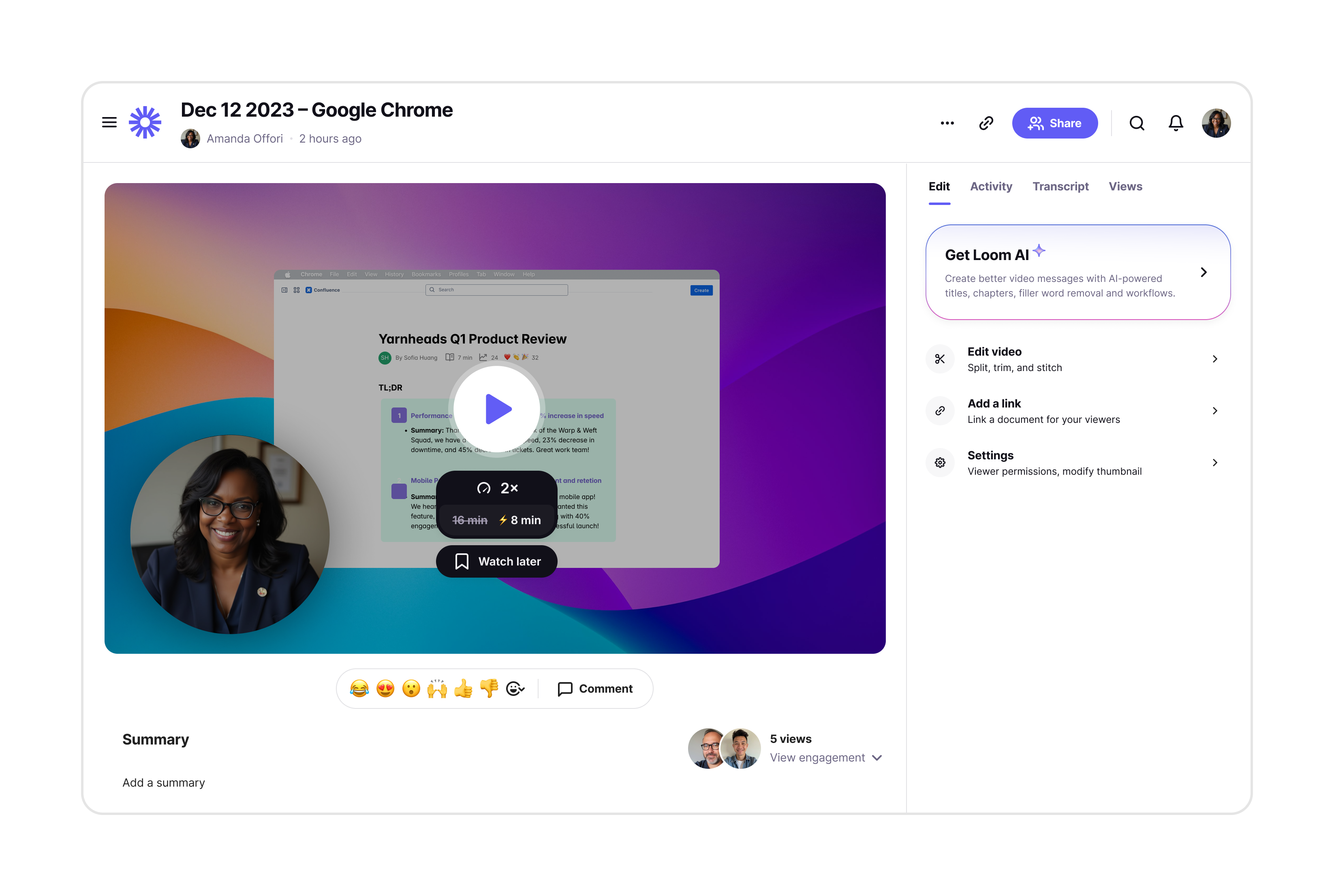
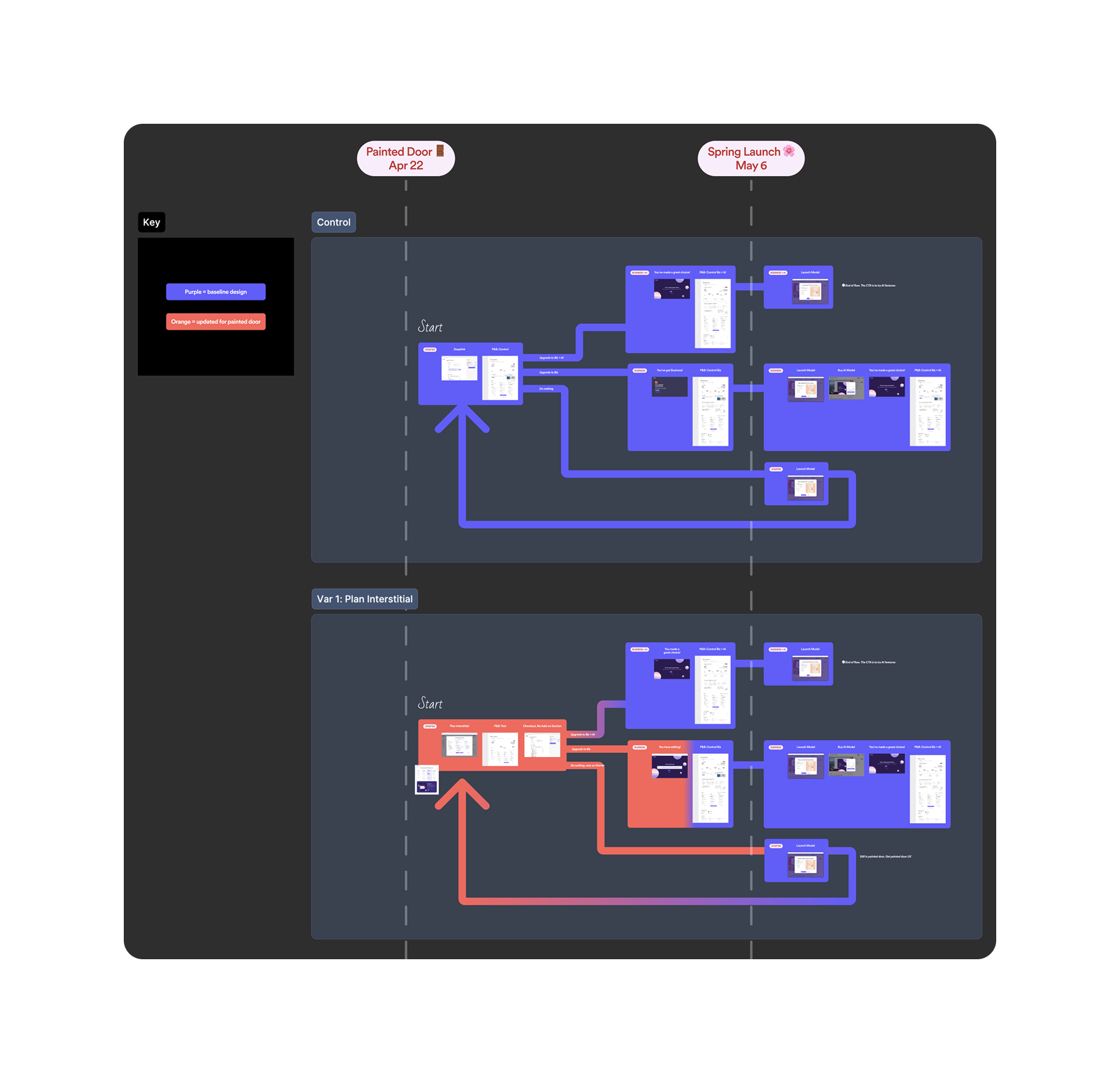
We knew we were building an add-on. Almost nothing else was settled: which features were in it, which user types could buy it, or how it sequenced against the core launch. We used painted door and A/B tests to put options in front of users, gather data, and make iterative decisions on packaging and launch.
Where the complexity lives
Engineering preferred three tiers plus an add-on, because the billing system already supported it and it was cheap to build. I argued for a fourth tier: the add-on moved the complexity out of the billing system and into the customer’s understanding of what they were buying. The real question was where the complexity gets to live, in the system or in someone’s head.
I didn’t win it by arguing harder. I absorbed the cost — documenting every state transition, edge case, and grandfathering rule until the estimate stopped being frightening. The fourth tier shipped. I can’t put a number on what the specification work saved, but what was certain is that it was insurance against billing mistakes while we moved the existing base onto the new tier.
Designing next to an AI team
The commercial side of an AI product is not separable from the product side. I was designing how people would meet and pay for these features while the core team was still settling what the features would do, which meant the two shaped each other week to week.
- What you can build determines what gets packaged. The core team deciding which features were scoped into launch impacted where the add-on boundaries fell.
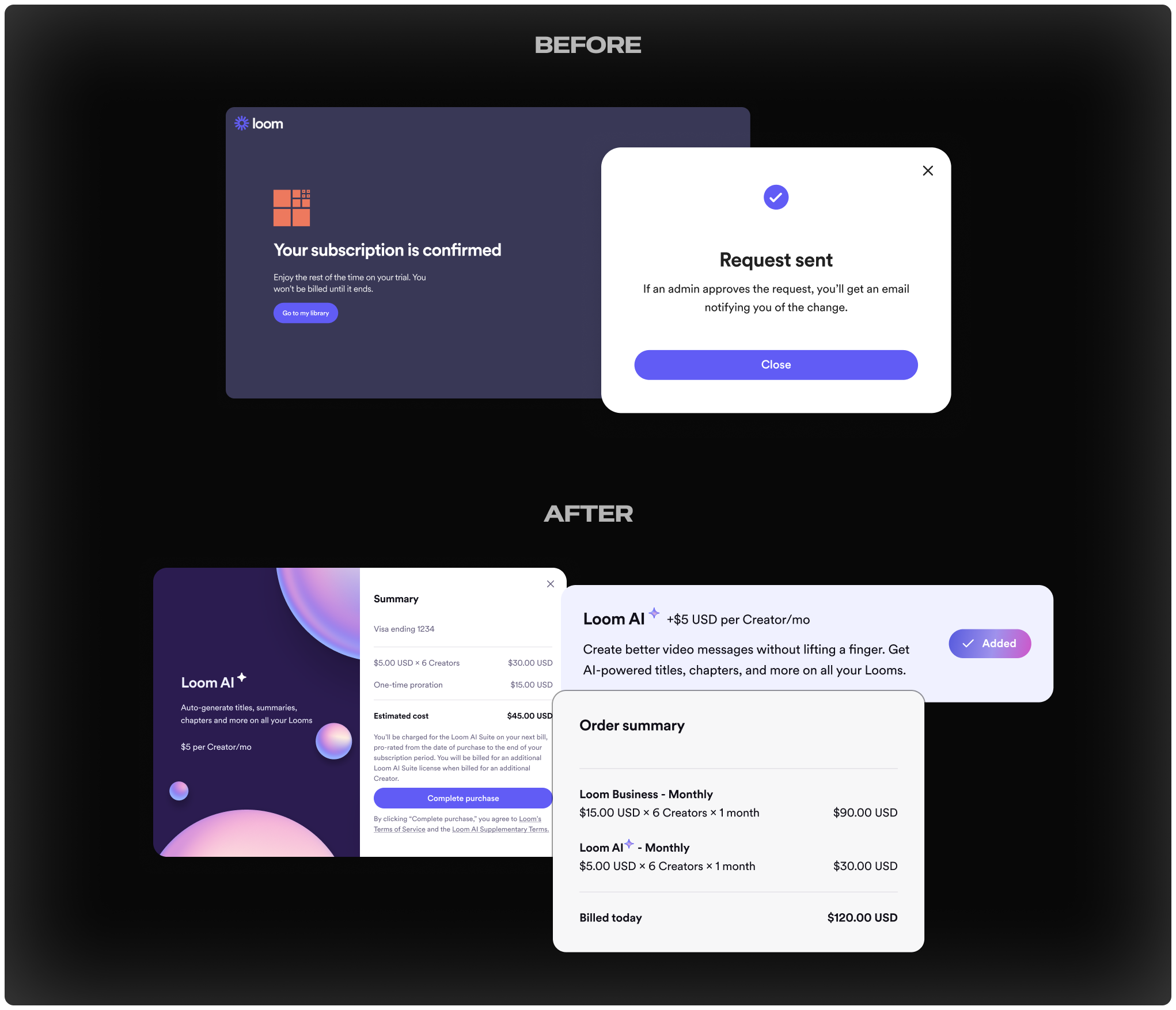
- The AI features are difficult to paywall the usual way, leading to the new banner pattern above.
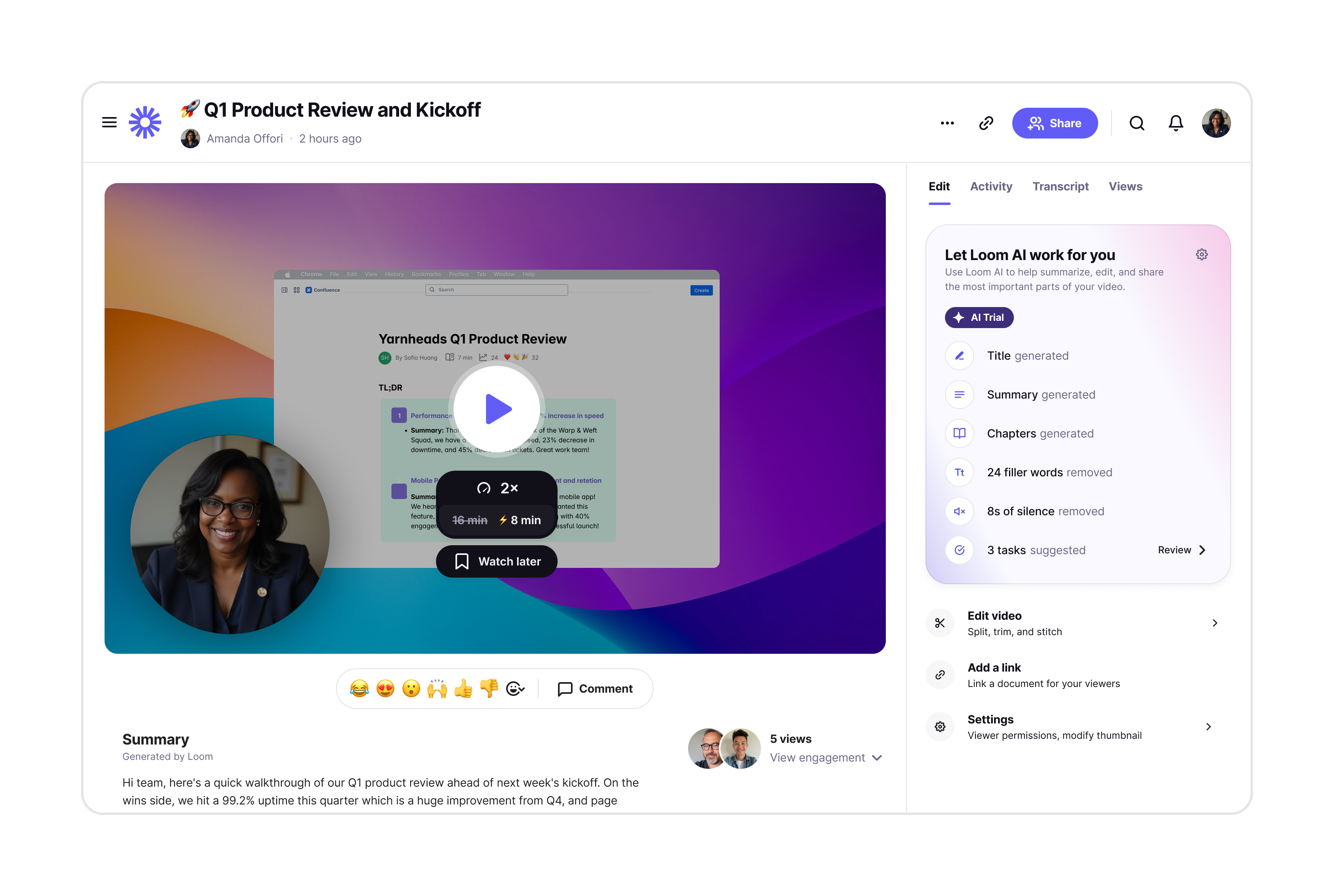
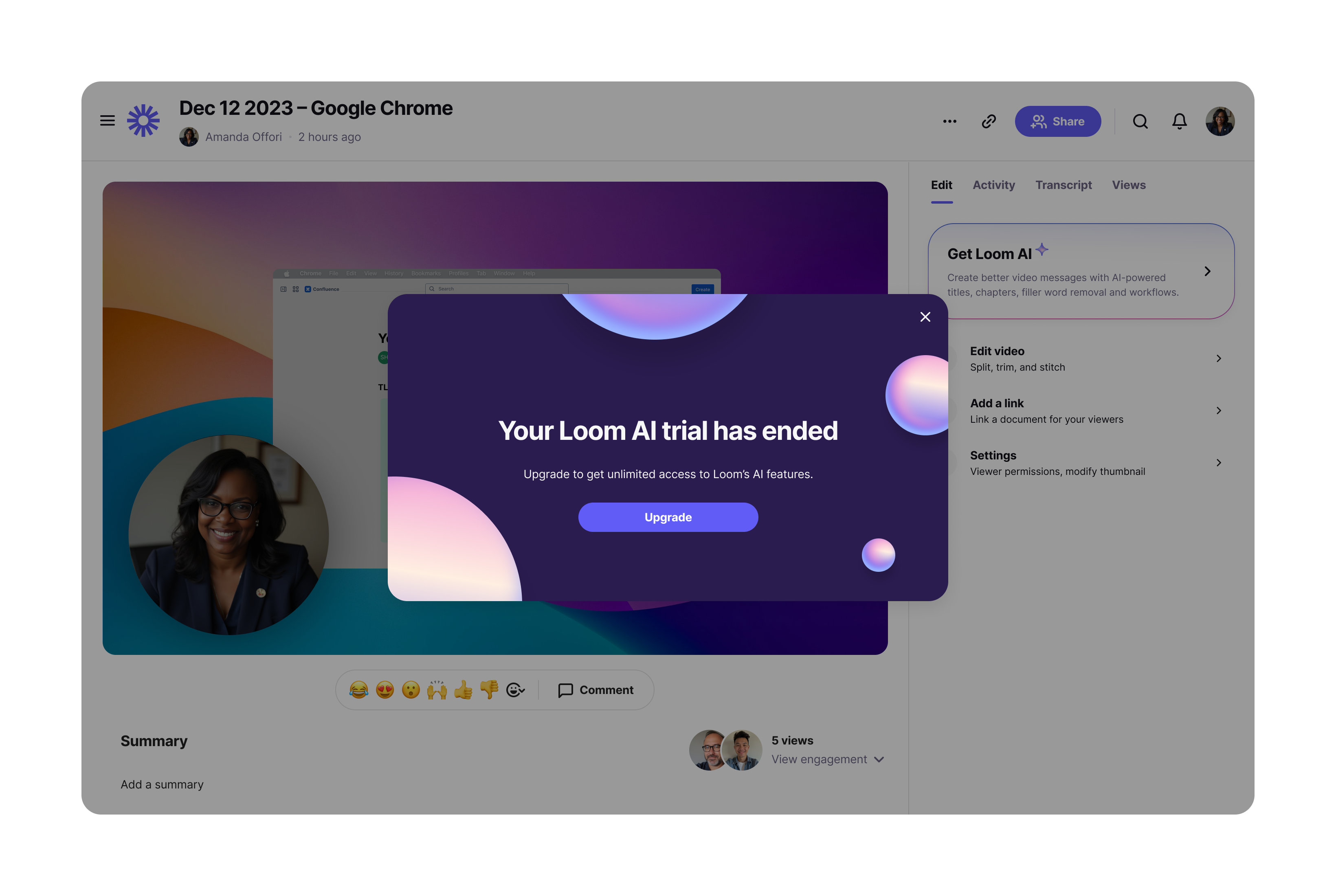
- Loom’s trials had always been time-based. This one metered videos, which meant new patterns for showing what you had left and what happened when it ran out.
What I took from it
The design system is a tool, not a rule
Like any tool it should be used critically. On this project we departed from the system deliberately, because the existing paywall pattern could not support what we needed. The departure and incorporation of an exciting sub-brand into the product ended up driving revenue.
Engineering worked from the design files, not the spec
This launch pulled in product, core, marketing, and data. With that many moving pieces people needed one place to check which features shipped, in which package, and in what order. Engineering, content, and QA worked from the design files rather than the spec, because the diagrams answered “what does this person see” in seconds instead of a twenty-minute conversation.
The map nobody asked for
Nobody asked me to map Loom’s paywalls. They’d sprawled across the product over years, so every new one was designed from scratch and none of them agreed with each other. The problem wasn’t that they were bad — it was that nobody could see the whole system, so nobody could argue for fixing it.
I mapped every entry point into one codex: what it was, where it fired, what it offered. Then I turned it into a phased plan, so a refactor nobody wanted to fund became a sequence with a first step small enough to say yes to. Other designers and engineers worked from the codex instead of inventing their own. The refactor itself never got funded. In the future, I’d attach phase one to a project that was already funded instead of asking for new budget.